NT General Practice Education
Home / GP Registrars / Medical Educator Network
 
HOME | FEEDBACK 
The Medical Educator Network:
The NTGPE’s Dispersed Medical Educator Network has been created to develop a higher level of authenticity in medical students and GP training than presently exists. It uses a new approach to constructing and operating the medical educator team within a Regional Training Provider, RTP, and differs noticeably from those using regional nodes.


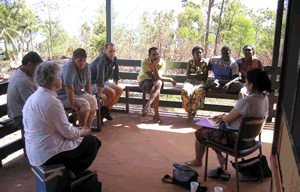
Medical Educators & team meeting with clinic staff -
Elcho Island


In this new approach, programs will be provided by a team of medical educators, including remote members who are experiencing the contexts and day-to-day issues faced by trainees and their supervisors, and are regularly and immediately providing medical education and training based on these experiences. Such a dispersed network provides substantially greater levels of authenticity because the team members reflect more accurately the demographics of the students, GP registrars and their trainers. Remote members will complement the capabilities and experiences of those at regional or urban-style centre's.

The team of medical educators plan and deliver a modified program of learning experiences for students, registrars and trainers. This plan will ensure more authentic delivery of remote and Aboriginal health perspectives across all NT locations through mentorship, advice and direct input to these learners and colleagues in the delivery team.

The fully interactive network of medical educators will be dispersed across the NT in a way that mirrors NT registrars and trainers’ locations and contexts, including geographic isolation and cultural difference, to provide training for registrars and trainers  that responds to the professional, cultural and social needs in those settings.


By design, it will be this group who will decide together the learning frameworks and approaches, with facilitation and support from Cultural Educators and others with complementary education and training, IT and administrative backgrounds. This will create a substantially more integrated, decentralised and authentic training program and environment for GP's.

This network adds complementary value to the roles of GP trainers  in the GP registrar training process. The network builds on the understanding that medical educators play a leadership and coordinating role in the training process, as well as providing key roles in training advisory roles for registrars.

More remote medical educators convey complementary understandings about contemporary remote and/or Aboriginal community practice, and immediate aspects of the professional challenges and rewards in them, through their leadership in medical learning and education as mentors and/or training advisors. This directly facilitates student and registrar decision-making and helps continue their commitments to remote medical practice.

The benefit include GP registrars who are better prepared for rural and remote practice, and are better able to assess their compatibility with such a professional environment. They will also be equipped with a wide range of medical skills that will ensure their suitability for metropolitan practice, and are normally very adept at working in culturally diverse contexts and demonstrating cultural safety. Medical students will also benefit from the added authenticity that will come from complementary and additional attention to remote and Aboriginal medical contexts. Each of these areas, and associated developments for medical educators and trainers, will directly contribute to improvements in vertical integration of medical education and training in the NT

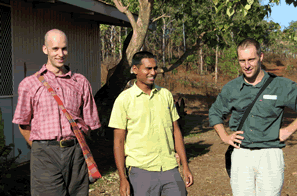
Paul Burgess David Peris and Simon Morgan meet at Elcho Island to discuss the Medical Educator Network
About Us | GP Training | Students | Research | Board | News | Information Technology | Resources | Publications